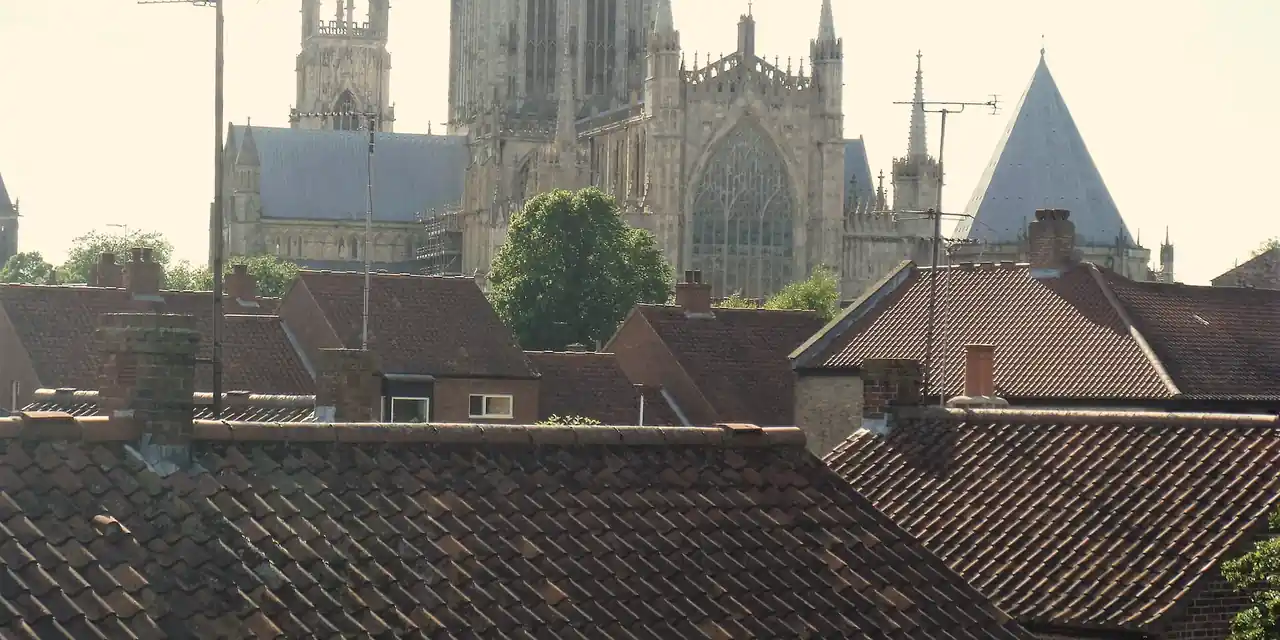
Tiled roofs we work on
Walk down almost any street in York and you'll see why tiled roofing matters here. Red clay pantiles are part of the character of the city and the villages around it, from cottages and outbuildings to terraces and farmhouses. Alongside them sit plain clay tiles on Edwardian and inter-war houses, and concrete interlocking tiles on many post-war and modern homes. York Heritage Roofing works on all of these, from replacing a single cracked tile to stripping and re-roofing a whole house.
Our tiled roofing work in York includes:
- New tiled roofs for extensions, garages and outbuildings, with breathable membrane, treated battens at the correct gauge and proper fixings.
- Complete re-roofs – stripping the old covering, checking and repairing timbers, then re-laying with new or carefully salvaged tiles.
- Tile repairs and replacements – cracked, slipped or missing tiles, often the first sign that nails or battens are failing.
- Ridge and hip work – re-bedding loose ridge tiles, replacing cracked ones, or upgrading to a mechanically fixed dry ridge system.
- Valleys – renewing worn lead or GRP valleys, or rebuilding swept and laced valleys where the roof needs them.
- Verges, flashings and abutments – mortar and dry-verge repairs, and new lead flashings where the roof meets walls and chimneys.
Clay pantiles, plain tiles and concrete tiles
Clay pantiles are the S-shaped single-lap tiles you see right across the Vale of York. They give a warm, rippled look and are often the expected material on older properties and in conservation areas. Because they are single-lap, the detailing at the head of each tile, at the verges and at the eaves needs care to keep wind-driven rain out. Many older pantile roofs were torched (pointed) underneath with lime mortar instead of having a membrane, which is something we look for when assessing an older roof.
Plain tiles are small, flat, double-lapped tiles, made in clay or concrete. They need more tiles and more battens per square metre, but suit steeper roofs, dormers and curved details well and age gracefully.
Concrete interlocking tiles are larger, quicker to lay and economical, and they're common on post-war housing. When replacing them we'll check that the existing roof structure, pitch and any manufacturer requirements suit the tile you choose.
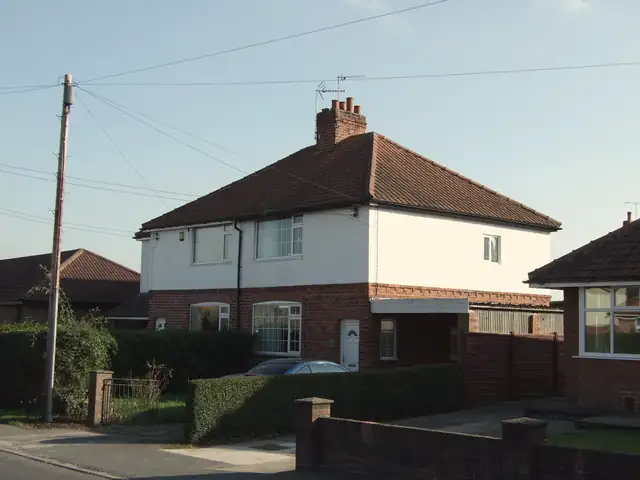
Whatever the tile, the parts you don't see matter just as much: a breathable underlay, correctly sized treated battens, the right nails and clips for the exposure, and ventilation so moisture doesn't build up in the loft.
Signs your tiled roof needs attention
- Slipped, cracked or missing tiles after windy weather.
- Loose or rocking ridge tiles, or mortar washing out onto the gutters.
- Damp patches or stains on bedroom ceilings, chimney breasts or in the loft.
- Daylight visible through the roof from inside the loft.
- Sagging lines on the roof slope, which can point to tired battens or timbers.
- Heavy moss holding water against tiles, or tiles that are flaking and crumbling (spalling) after frosts.
- Old, brittle bitumen underfelt that has torn and sags between rafters.
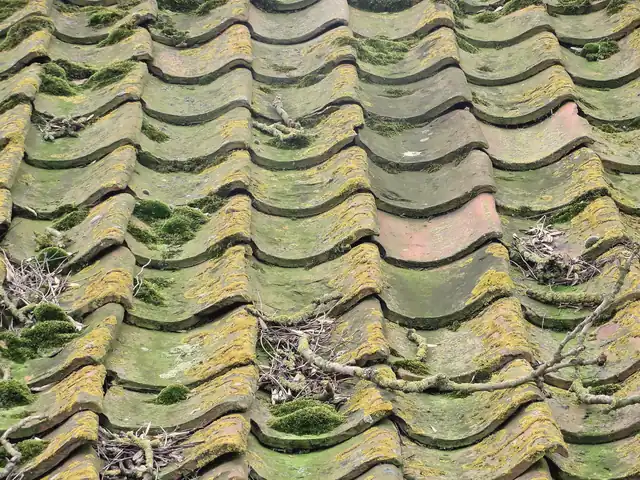
One or two slipped tiles don't mean you need a new roof. When lots of tiles are slipping across the roof, though, it's often a sign that the nails have corroded – sometimes called 'nail sickness' – and patch repairs will only buy limited time. We'll tell you honestly which situation you're in.
How we approach a tiled roofing job
- SurveyWe look at the roof from the ground, the loft and, where safe, close up. Where we can, we take photos so you can see what we've seen.
- Written quoteYou get a clear written quote explaining the work, the materials and anything that can't be known until the roof is opened up.
- Access and protectionScaffolding or other access is arranged where needed, and we protect gardens, paths and conservatories.
- The workOld tiles are stripped or repaired, timbers are checked, then new membrane, battens and tiles are fixed to suit the tile and the exposure.
- Clear-up and handoverWe clear debris, check gutters, and walk you through what was done.
If your tiled roof also has a flat roof section, such as a dormer or rear extension, see our flat roofing page. For small fixes, our roof repairs page explains how we deal with leaks and storm damage. Older houses with slate or stone may be better served by our slate roofing or Yorkshire stone roofing pages. You can also check the areas we cover around York.