Chimney repairs for York homes
York's skyline is full of chimneys – tall brick stacks on Victorian terraces, massive gable-end stacks on village cottages and clusters of pots on Georgian townhouses. They are also the most exposed part of any roof, and one of the most common sources of leaks we're called to. York Heritage Roofing repairs chimneys across York and the surrounding villages: repointing, flashings, flaunching, pots, cowls and caps, and partial rebuilds where a stack has become unsafe.
Common chimney problems
- Failed flashings – the lead where the stack meets the slates or tiles splits, lifts or was only ever cement fillet. This is the single most common chimney leak. See our leadwork page.
- Eroded mortar – joints weather out and let rain soak into the brickwork, showing as damp patches on the chimney breast inside.
- Cracked flaunching – the sloped mortar cap around the pots cracks and lets water into the top of the stack.
- Loose or broken pots – a hazard to anyone below, especially after high winds.
- Open, unused flues – rain falling straight down a flue that no longer has a fire to dry it out.
- Leaning or spalling stacks – frost-damaged bricks and, on some old stacks, a lean caused by sulphate attack in the mortar.
Our chimney services
- Repointing – raking out failed joints and repointing in a mortar suited to the brick. Older, softer bricks generally need a lime mortar.
- New lead flashings – stepped flashings, back gutters and aprons in traditional code lead, properly chased into the joints.
- Flaunching and pots – re-flaunching, re-setting loose pots and replacing broken ones.
- Caps and cowls – ventilated caps for disused flues; bird guards and cowls where appropriate.
- Partial rebuilds – taking an unsafe stack down to sound brickwork and rebuilding it, re-using the original bricks where possible.
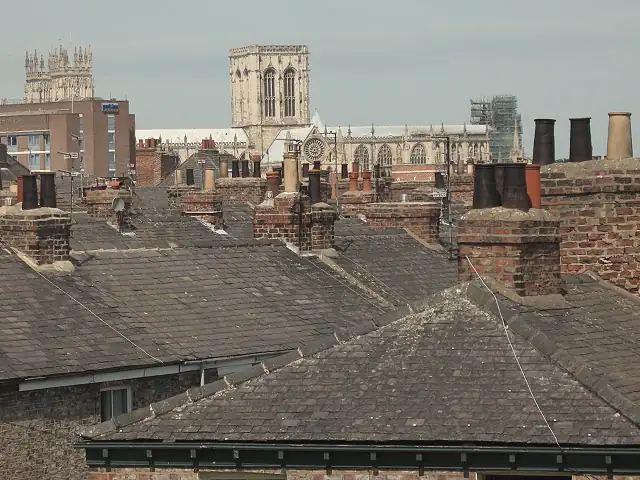
How we approach a chimney repair
- InspectWe look at the stack, the flashings and the chimney breast inside, so we fix the cause rather than the symptom.
- Explain and priceYou get a written price that includes access, and photos of what we found where it's safe to take them.
- RepairMaterials matched to the house: lime where the brick needs it, lead dressed to the roof, pots re-set securely.
- Tidy and checkGutters cleared of debris and the work explained before we leave.
Chimneys on older and listed buildings
On period properties the chimney is part of the character of the house and the street. We repair rather than replace wherever we can, match brick and mortar, and keep original pots. If your home is listed or in a conservation area, some alterations – including removing or significantly altering a stack – may need consent. See our listed building roofing page for more on that.
Leaking chimney right now?
If water is coming in, call 01904 922494 – we offer 24/7 emergency call-outs. For planned work, our roof costs guide includes typical chimney repair and repointing prices. We cover York and nearby areas including Acomb, Fulford, Haxby, Selby and Tadcaster.